
In what can only be described as an off-cycle surprise, we're excited to report on the announcement of the Omega Seamaster Planet Ocean Ultra Deep Professional.It was only a couple weeks ago that we received an invite to a mysterious press release to be held on June 20th in London. Little information was given aside from the fact that the event would feature Victor Vescovo, who, among other interests, is an adventurer and undersea explorer (he's even completed the Explorer's Grand Slam). The invitation made mention of Vescovo's Five Deeps Expedition, a journey to the deepest spots within each of the five oceans and the fact that he actually set the record for deepest dive at 10,928 meters (35,853 feet)On his wrist was an Omega Seamaster Planet Ocean, but on the outside of his submersible, the DSV Limiting Factor, and also on two of his three roving Landers, there was another watch that made the trips. Enter the Omega Seamaster Planet Ocean Ultra Deep Professional.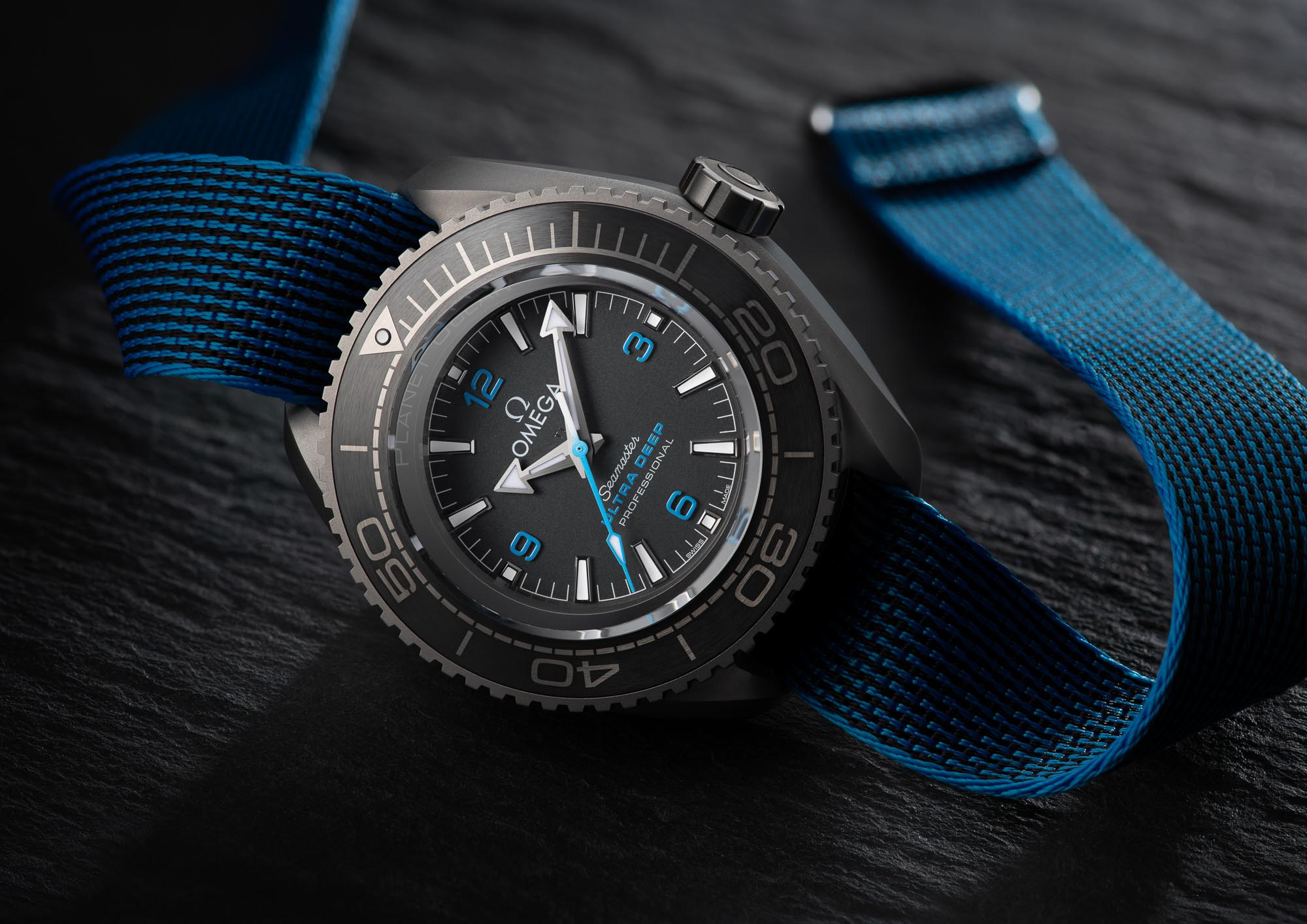 Omega Seamaster Planet Ocean Ultra Deep ProfessionalLet's get this out of the way, there are three Omega Seamaster Planet Ocean Ultra Deep Professional watches in existence. This is not a watch that will be made available to the public in this form, but what we're seeing today ushers in some serious innovation that will make its way to watches that you will eventually be able to buy. In automotive terms, think of it as a bit like race on Sunday, sell on Monday if you will.The Omega Seamaster Planet Ocean Ultra Deep Professional is made of forged Grade 5 titanium and from cutoffs of the same material used on the hull of the Limiting Factor submersible used by Vescovo. The hull material was DNV-GL certified (DNV-GL is a 3rd party certification company) and the three Omegas contain the same DNV-GL stamp in their case backs. But we've seen titanium often as a case material on dive watches, so that's not the innovation that excites me.When you fly at 30 ? 35,000 feet, add another 50% and then put that under water ? the forces are roughly 16,000 psi!
Swipe to the left
Christie
June 20, 2019
